

When it comes to making a statement, few athletes can rival Brittney Griner. Known for her towering presence on the court, she took a bold stand at the Olympics that left many talking. Kneeling during the national anthem, she sparked a conversation that transcended sports, touching on issues of equality and justice.
Griner’s act wasn’t just a moment of protest; it was a powerful reminder that athletes can be catalysts for change. With her unique blend of talent and activism, she challenged fans to rethink what it means to represent one’s country. So grab your popcorn and settle in, because this isn’t just about basketball—it’s about the heart and soul of a movement that’s gaining momentum.
Brittney Griner’s Impact on Sports Activism
Brittney Griner’s decision to kneel during the national anthem at the Olympics not only brought attention to social issues but also highlighted the role athletes play in advocacy. Her action fueled discussions about equality and justice, pushing these topics into the spotlight.
The visibility Griner brought to these conversations serves as a model for other athletes. Many athletes in various sports have since followed her lead by using their platforms to address societal concerns, further unifying the sports community in activism.
Griner’s stance reminded fans that sports can be interwoven with critical societal issues. As a prominent figure in the sports world, she has encouraged athletes to speak out on issues they care about. This shift in athlete activism has promoted a culture where voice and action go hand in hand.
By challenging the traditional expectations of athletes, Griner has reshaped the narrative surrounding national representation. Her actions resonate deeply, prompting fans to reflect on the values represented by their teams and country.
The response to Griner’s activism demonstrates the evolving relationship between sports and social justice. This dynamic shows how powerful platforms can arise from a single act of protest, influencing public opinion and sparking meaningful conversations about change.
The Context of Kneeling at the Olympics
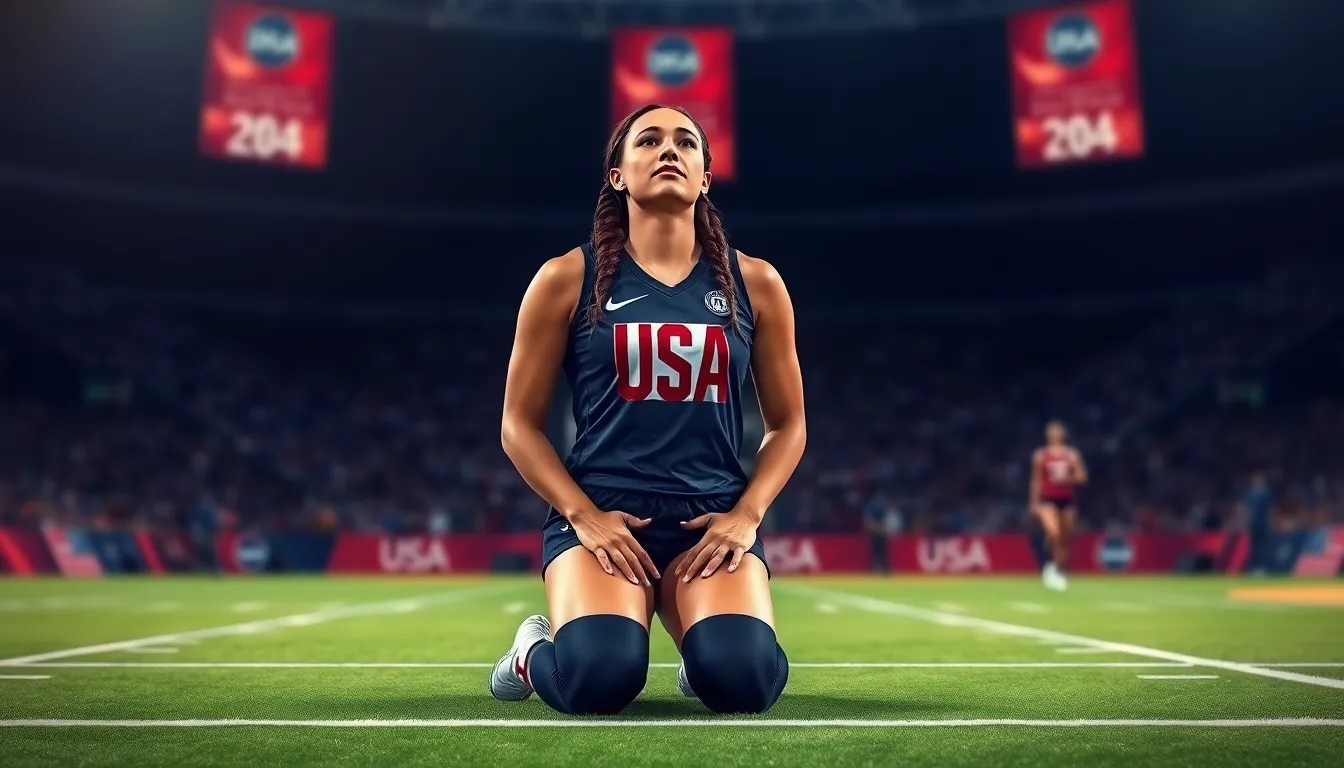
Brittney Griner’s kneeling at the Olympics represents a significant moment in sports activism. This act drew attention to ongoing social justice issues and sparked widespread dialogue.
Historical Significance
Kneeling during the national anthem has historical roots in protests for racial equality. Colin Kaepernick’s decision in 2016 marked a pivotal moment, inspiring many athletes, including Griner, to take a stand against injustice. Protests like these highlight a long-standing struggle for civil rights within American society. Each athlete’s action emphasizes the importance of using their platform to advocate for change, pushing a collective message for progress. Movements in sports often mirror broader societal issues, making Griner’s act part of a larger narrative on equality.
Public Perception
Public reaction to Griner’s kneeling is varied, revealing deep divisions within society. Many supporters view her actions as brave and important, reflecting a commitment to social justice. Critics often interpret the protest as disrespectful, emphasizing a clash between patriotism and activism. Media coverage influences perceptions, shaping narratives around athletes’ roles in political discourse. Conversations surrounding her actions reveal complexities in the public’s understanding of national identity. Through this lens, Griner encourages discussions that challenge traditional views and promote awareness of social issues in sports.
Analysis of Griner’s Statement
Brittney Griner’s kneeling during the national anthem provokes deep reflection on personal history and social justice. Her journey shaped her understanding of inequality, impacting her approach to activism. Experiences as a Black woman in America informed her decision, emphasizing the challenges faced by marginalized communities. The action resonates personally, showcasing her commitment to promoting awareness around systemic racism. Griner’s platform enables her to share these experiences openly, influencing many within the sports world.
Political consequences of Griner’s protest extend beyond the realm of sports. Her kneeling illustrates a broader movement calling for racial equality and justice, linking her actions to those of various activists. Discussions surrounding her decision highlight critical issues: police brutality, systemic discrimination, and civil rights. Elected officials and sports organizations increasingly confront social justice topics due to her influence. Griner’s impact persists, as public discourse evolves in response to her stance, urging others to reexamine their views on national identity and representation in sports.
Reactions from the Sports Community
Brittney Griner’s decision to kneel during the national anthem elicited varied reactions within the sports community. Many athletes and organizations expressed support for her stance, recognizing the importance of addressing social justice.
Support and Solidarity
Numerous teammates and fellow players voiced their solidarity with Griner. They emphasized the significance of using their platforms for advocacy. The WNBA, as a league, has historically championed social issues; they rallied behind Griner by endorsing her cause. Additionally, major sports figures like LeBron James praised her bravery. This collective support fostered an environment where athletes feel empowered to speak out against inequality and injustice. Many saw Griner’s actions as a necessary step toward fostering change, prompting a broader dialogue about athlete activism.
Criticism and Controversy
Contrasting opinions emerged from various segments of the sports community. Critics accused Griner of disrespecting the national anthem and the flag, labeling her actions unpatriotic. Some commentators argued her protest diverted attention from athletic achievements. Traditionalists within the fanbase expressed disapproval, leading to heated debates on social media. Media coverage heightened these sentiments, often framing her kneeling in a polarizing light. This criticism reflects deeper societal divides regarding patriotism and activism in sports, demonstrating that Griner’s protest resonates far beyond basketball.
The Future of Athlete Activism
Athlete activism is poised for a significant evolution as more players choose to use their platforms for advocacy. Increased visibility of social issues compels athletes like Brittney Griner to take stands that resonate beyond the realm of sports. Such decisions challenge fans and organizations to reconsider their roles in promoting equality and justice.
This shift reflects a growing acknowledgement within the sports community about the impact of social justice. Athletes in various leagues openly support movements related to racial equity, climate change, and mental health. By collaborating with activists and community organizations, they amplify their messages and foster deeper engagement.
Diverse reactions to Griner’s actions highlight the complexity of athlete activism in contemporary society. While many athletes express solidarity, some remain hesitant due to fear of backlash. Discussions on this topic often reveal societal divisions surrounding issues like patriotism and respect.
Noteworthy changes in fan engagement emerge as a result of this activism. Audiences increasingly champion athletes who speak out against injustice while holding organizations accountable for their stances. The willingness of athletes to challenge norms encourages new generations of players to embrace advocacy as a core responsibility.
Expect future athletes to continue pushing boundaries. As awareness grows, expectations of athlete behavior will shift. The intersection of sports and social issues illustrates a transformative potential that has profound implications for both athletes and fans.
Brittney Griner’s kneeling at the Olympics serves as a powerful reminder of the role athletes play in advocating for social justice. Her actions not only challenge traditional views on national representation but also inspire a new wave of activism within sports. As discussions around her protest unfold, they highlight the complexities of patriotism and the importance of addressing systemic issues.
The mixed reactions to her stance reflect broader societal divides yet also reveal a growing support for athlete activism. Griner’s influence continues to reshape public discourse, urging fans and organizations to engage with pressing social issues. As more athletes follow in her footsteps, the landscape of sports activism is bound to evolve, fostering a culture where advocacy is embraced as a vital part of athletic identity.